The Manual AI Trap: How Enterprise Brands Achieve Visual Consistency at Scale
Generative AI has reached a breathtaking tipping point. In just a few seconds, a modern generative model can render a handcrafted leather armchair resting inside a sunlit Scandinavian loft with photorealistic textures, dynamic shadows, and rich atmospheric lighting.
For growth marketers and e-commerce teams, this capability initially feels like magic. But as digital catalogs scale from ten products to ten thousand, a frustrating reality sets in: manual AI is chaotic, unpredictable, and impossible to govern.
When brand managers, marketplace operators, and content teams rely on manual AI—typing individual prompts into ad-hoc generative tools, tweaking background removers one image at a time, or manually stitching assets together—they inadvertently enter the "Manual AI Trap." Instead of gaining efficiency, they end up with inconsistent lighting, hallucinated product features, fragmented brand aesthetics, and severe operational bottlenecks.
To succeed in an AI-native retail environment, brands cannot rely on manual prompting. They need programmatic visual consistency at scale.
The "Manual AI" Paradox in E-Commerce
The promise of generative AI is speed and cost reduction. However, when executed manually—a practice where human operators prompt, review, and manually tweak AI imagery on a per-SKU basis—the technology creates new operational friction.
1. The Prompt Variance Problem
Generative AI models are inherently non-deterministic. If you enter the prompt "modern minimalist couch in a luxury living room" five times into a standalone image generator, you will receive five wildly different lighting environments, background scales, color temperatures, and aesthetic moods. When displayed side-by-side on a Product Listing Page (PLP) or marketplace grid, the visual layout feels disjointed and unaligned.
2. Product "Hallucination" and Accuracy Losses
Point-and-click generative tools often treat the main product as a fluid suggestion rather than an exact inventory item. A fabric weave gets smoothed over, a chair leg angle shifts slightly, or wood grain patterns are altered. In categories like home decor and apparel, subtle visual inaccuracies directly lead to customer dissatisfaction. If the physical product delivered to a customer does not match the AI-generated lifestyle image, return rates skyrocket.
3. The Hidden Cost of Manual Cleanup
While generating a single image via a prompt takes seconds, refining that image so it meets brand guidelines often takes hours. Teams end up spending massive amounts of time running manual AI output through image editing software to patch up mistakes, balance lighting, or remove artifacts. This "manual AI layer" destroys the efficiency gains that generative technology promised in the first place.
Why Visual Consistency is a Financial Lever, Not Just a Branding Goal
Visual consistency across product catalogs is frequently treated as a design preference. In modern e-commerce, however, visual uniformity directly drives key business metrics.
Manual AI Prompting    --> Inconsistent Lighting & Scale --> Customer Hesitation --> High Cart Abandonment
Automated PXM Pipeline --> Uniform Visual Quality       --> Fast Comprehension --> Lower Return Rates
Boosting Conversion Rates Across Channels
When shoppers browse a catalog or marketplace, visual cohesion creates immediate trust. A catalog where every SKU features consistent background ratios, true-to-life proportions, and predictable studio lighting allows shoppers to evaluate products effortlessly. Removing visual noise eliminates buying friction and helps shoppers make purchasing decisions faster.
Reducing Return Rates
Understanding how to reduce furniture return rates in e-commerce comes down to setting accurate expectations. Uncontrolled manual AI generation often alters material finishes or distorts item dimensions. Automated, true-to-life visual generation ensures that every AI lifestyle scene preserves exact product geometry, color fidelity, and scale—reducing post-purchase mismatch and driving down returns by up to 35%.
Streamlining Marketplace Seller Onboarding
For marketplace operators, third-party vendor content is a major quality bottleneck. Sellers submit images taken under varying lighting conditions, angles, and resolutions. Manually auditing and fixing thousands of merchant listings is impossible without a massive team. Programmatic visual governance allows marketplaces to enforce strict catalog guidelines automatically, transforming poor vendor imagery into cohesive listings in minutes.
The Framework: From Manual Prompting to Automated PXM Orchestration
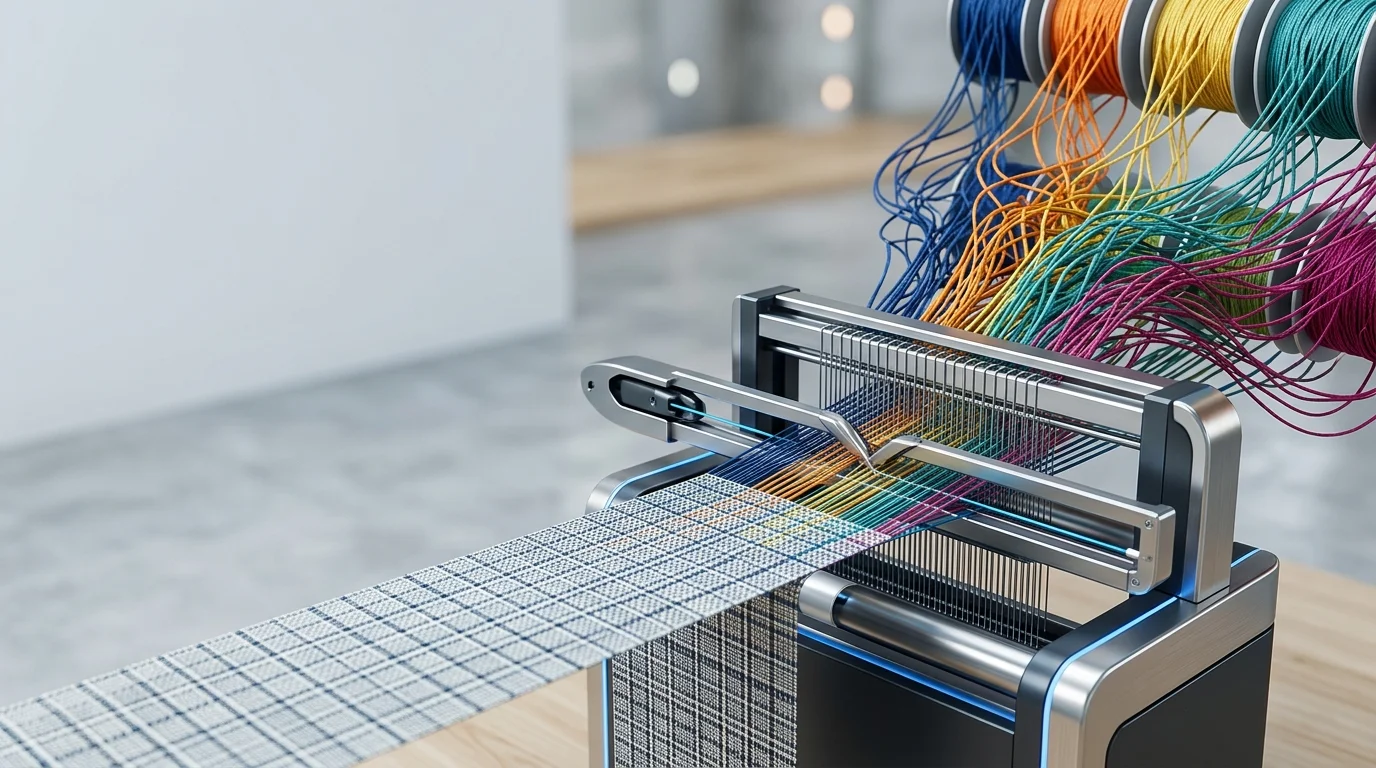
To move past the limitations of manual AI prompting, forward-thinking enterprise brands are adopting Product Experience Management (PXM) visual automation. This approach replaces chaotic prompt engineering with structured visual workflows.
Phase 1: Establish Programmatic Brand Guardrails
Rather than asking creative teams to type descriptive prompts for each product, enterprise systems utilize pre-configured brand templates. These templates specify depth-of-field rules, shadow intensity, aspect ratios, and color palettes programmatically. Every SKU processed automatically inherits these guardrails, guaranteeing visual uniformity across the site.
Phase 2: Preserve Core Product Geometry
True enterprise generation decouples the background environment from the primary product asset. By protecting the exact vector boundaries, textures, and dimensional proportions of the physical product, the AI generates contextually relevant surroundings (such as an AI lifestyle scene generator for furniture) without altering the actual merchandise.
Phase 3: Parallel Batch Processing
scaling requires processing thousands of SKUs simultaneously rather than sequentially. Instead of generating assets one by one, enterprise pipelines ingest full product feeds, generate studio and lifestyle visual variants in parallel, and export them directly to your Commerce platform or PIM.
How VizIQ Powers Consistent Visuals at Scale
As an AI-first content automation platform, VizIQ bridges the gap between raw generative capability and enterprise-grade brand governance. Instead of acting as a simple image generator, VizIQ functions as an autopilot for product visuals, allowing brands and marketplaces to enhance and publish high-quality assets in minutes without traditional photoshoots or complex 3D modeling setups.
When comparing legacy 3D rendering engines like Threekit vs VizIQ platform comparison dynamics, traditional systems often require heavy 3D asset creation and manual scene builds. VizIQ streamlines this by deploying automated AI visual engines directly tailored to e-commerce workflows:
- VizIQ Studio: Transforms flat product photography into rich, contextually accurate lifestyle scenes while maintaining 100% product geometry fidelity.
- VizIQ Enhance: Automatically fixes lighting inconsistencies, removes unwanted background noise, and normalizes catalog image quality across thousands of vendor assets.
- VizIQ Flow: Processes entire product catalogs in parallel, applying automated brand rules across all SKUs without human intervention.
- VizIQ View: Delivers crisp visual assets optimized for fast site loading and responsive mobile display.
Key VizIQ platform features enable brands to achieve up to 95% cost savings compared to traditional photoshoots, while delivering higher catalog coverage and consistent shopper experiences across every digital touchpoint.
Build a Future-Ready Visual Content Engine
Generative AI will continue to evolve at a breakneck pace, but raw AI models alone cannot protect your brand's visual identity. Moving from manual prompting to automated visual orchestration allows brands to scale their content engine, eliminate merchandise inconsistencies, and boost profitability.
Stop wasting operational hours on manual AI prompt engineering. Experience how VizIQ automates product visuals at scale—try it today with no credit card required.